The East Coast

The road trip down the east coast was mostly uneventful, due to not being able to see more than about 50ft ahead – the sea fog (“har” in this part of the world) persisted until mid-afternoon. We called in to see this pad on the way down.

DUNROBIN CASTLE

Dunrobin Castle belongs to the Sutherlands. We also saw another golden eagle, various falcons, an european owl; entry included a falconry display.

We stayed overnight in Elgin, not for the marbles but for the cathedral, albeit a ruin. We forgot to visit the ruin but we did see standup comedy above The Droughty Cobbler (thirsty shoemaker). We were two of 17 in the audience. They tried v hard, the headliner was ace.

Next day to Aberdeen, taking a divergent route along a “snow road” over The Caingorms, a range of mountains that includes Aviemore, home of Scottish skiing. Except it was gorgeous sunshine.

A third floor roof-spaced AirBnB is mighty fine temp home as we delve into the delights of city culture. Saw Edie at an upmarket film house. The film, which stars an 80 year old Sheila Hancock and was released last week, to us is bang on right now, because it is all about walking up mount Suilven and captures its stunningly beautiful Western Highlands surroundings, which we left behind only a few days ago. Otherwise, the film is eminently forgettable.

The beer choice is the opposite, this being the home of Brewdog and host to many others. And the chappie below, aka William Wallace. Not a hint of blue on him. Or Australian.
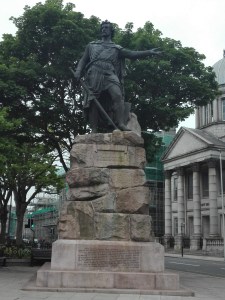
WILLIAM WALLACE

Aberdeen

At the end of the island

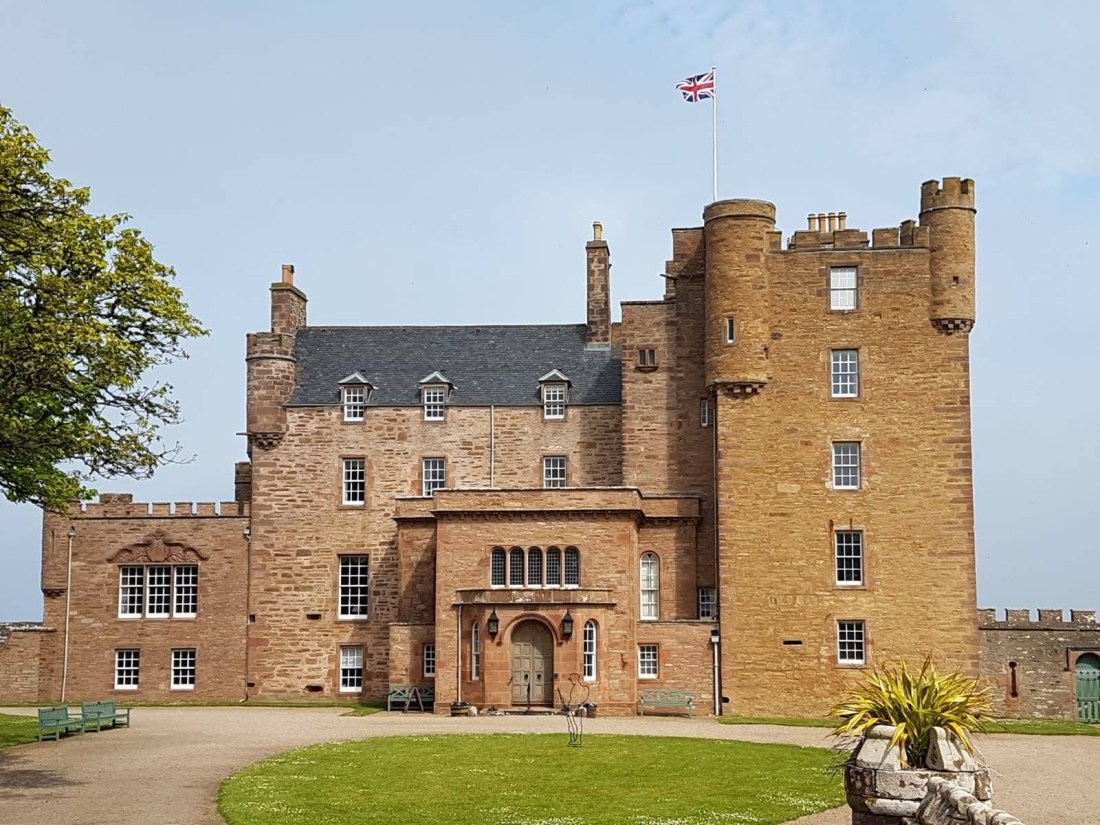
On the way to John O’Groats we stopped off at Castle of Mey (pronounced Meh). IMG-20180529-WA0001The Queen Mother bought it as a pile of stones in 1952, as a way of getting over losing her hubby. She paid £100 and then spent her own money on doing a ”Phoenix”. As castles go, it is small and intimate, and apparently even at the age of 101 she was skipping up and down the stone staircases. She left it to a new purpose built trust. So, Uncle Meh, it might be difficult to take ownership.

Next was John O’Groats, not nearly as tacky as some would have you believe. Best was the fog, so we could see nothing of The Orkneys, just eight miles away. But we could see the breakdown of stereotypes, as visitors from all over the world helped take snapshots of each other in front of the signpost. JOHN O'GROATSThis included Asian families of four, with all three females mostly obscured by hoods, taking photos of a group of four aged Hell’s Angels with the brightest, whitest motorcycle boots you ever did see; a just arrived, ever so excited single cyclist kit in all the lycra etc, and cyclist shoes so he could hardly walk, having his photo taken by a fat father of one child and three ankle snapping doglets; three motorcyclists taking photos of their motorcycles, without riders. A gentle, incessant stream of selfies interspersed with the extra cameramen made for a highly entertaining hour.
Then on to Wick, a sad tale of a town with millions currently being spent on regenerating the three harbours. Why three you clamour: from the 1890s to about 1950, Wick was the principal base for herring fishing in the …… world. Yep, world. At its prime, it had 1,100 trawlers operating out of its harbours, with over 3,000 land support gutters, packers and shippers.

Inevitably, the herring stock was decimated and what was left moved north, to Icelandic waters. Shame we didn’t start taking account of responsible fishing practice back then. The best part of Wick is now the fabulous Wick Heritage Museum, which tells the story of its herring rise and fall; the pinnacle of the exhibition is The Johnston Collection, three generations of family photographers whose output is so atmospheric. Yep, who’s in the museum business now …..

The East Coast

Thurso

We are now in Scotland’s, therefore UK’s, most northern town. The population of Thurso trebled in the 1990s, due the building of the Dounreay Magnox nuclear power station, about three miles down the road, so now is about 8,000. A walk down both banks of the river Thurso and then along the beach front reveal this town is ….. maybe not so great. But it is on the northern end of the island that is UK, so daylight lasts longer. Tonight sunset was about 11pm, accompanied with a full moon.

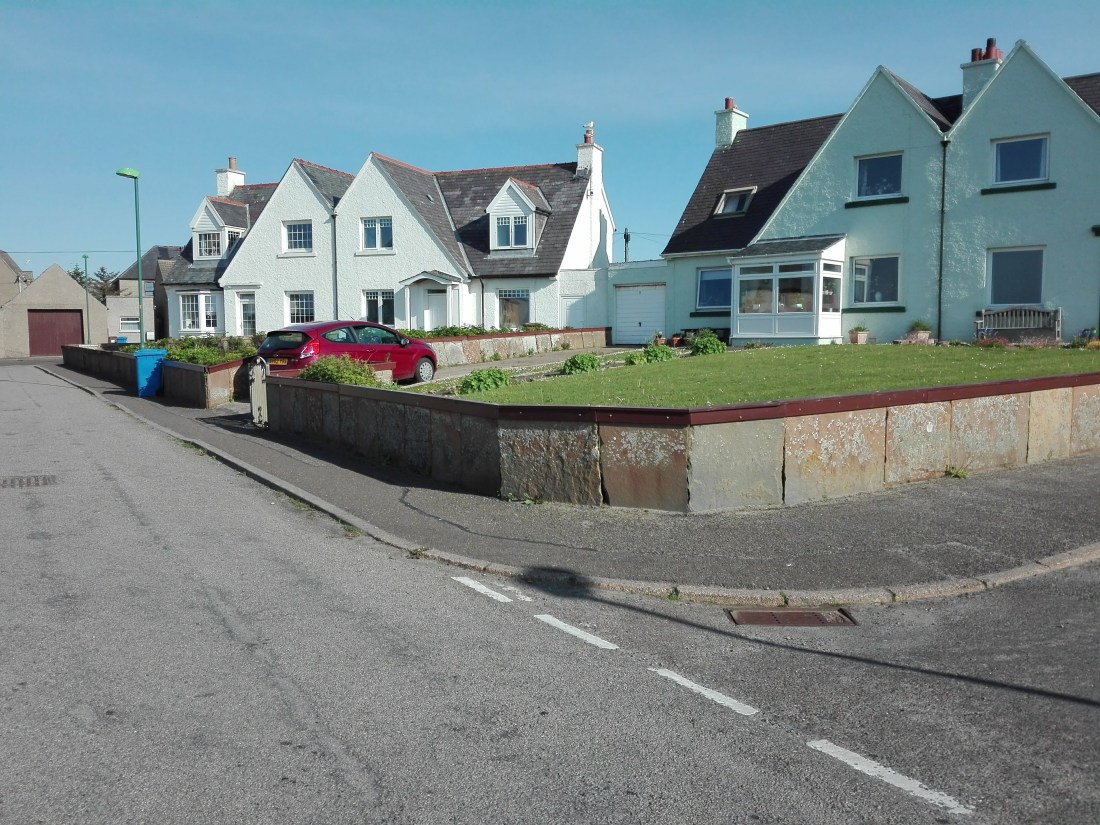
In the early 19th century, the town became the gateway to the Caithness flagstone industry and the major port for exporting paving stones throughout Britain and ‘the continent’. Check out the fences around these houses. PAVING STONES

At the end of the island

Ullapool 2

Saturday was beach day, so over many single track roads we journeyed to astonishing white beaches; first was Achnahaird, with almost noone there and, once shelter from the wind was found, a glorious Bennies session;WHITE BEACH second was Achmelvich where even at 17.30 the beach was full of families just having fun. Brill beaches. And sun in blue sky. Scotland not well known for sun tanning.
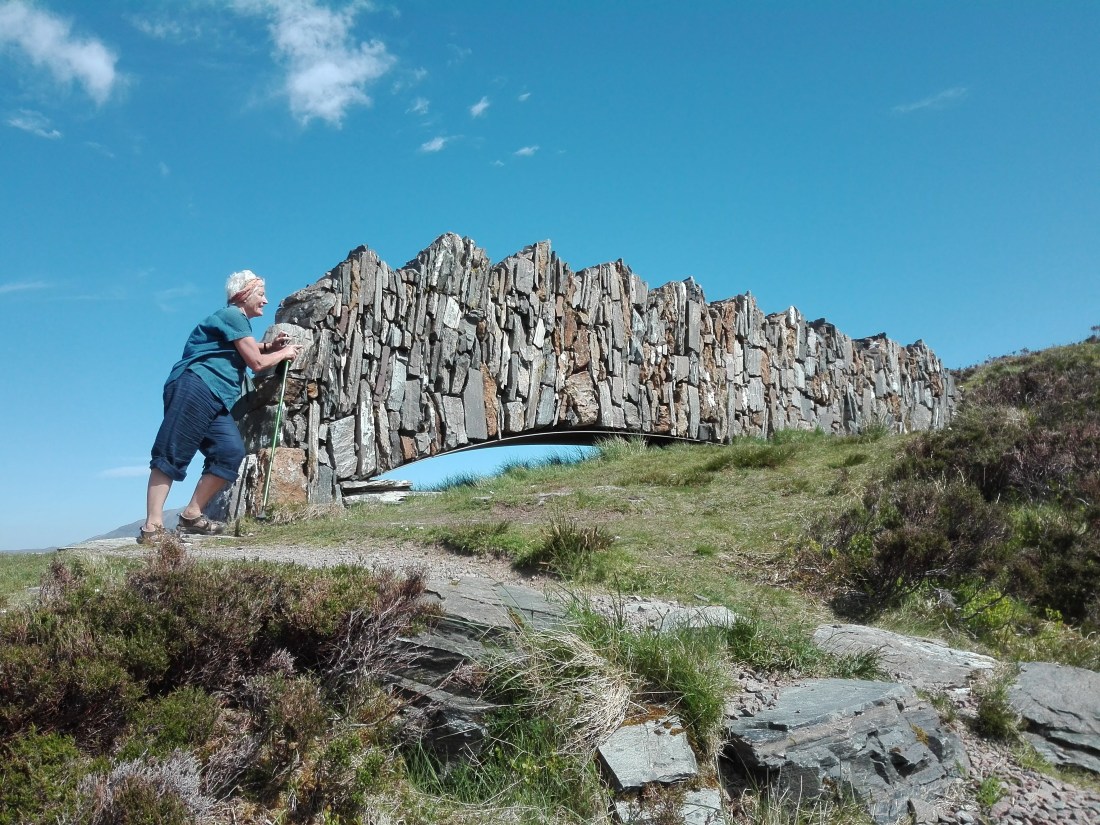
Sunday was walking day, so we walked up Knockan Crag Nature Reserve mountain, dodging rock tapping students. Stunning views over and above the stunning views at every corner. If emotional connection with environment was the challenge, we’ve been “flattened”. Mountains! Everywhere! And each corner of the road brings another stunner. Corr.

This is Indoors holding up a stone sculpture at the mountain top.MOUNTAIN SCULPTUREAfter we left, we have no idea about the work of art’s survival.
Thurso

Ullapool

Pronounced Oolapool, this is the largest settlement in the north west region of nearly up the top of Scotland. The journey included a substantial diversion to Inverewe gardens, owned by the Scottish National Trust and the recipient of £3m over the last three years. But heck, an amazing garden, on a steeply sided promontory and the very best museum signage and organisation we’ve ever seen in the restored 1930s house. Guess who’s in the museum business these days …..

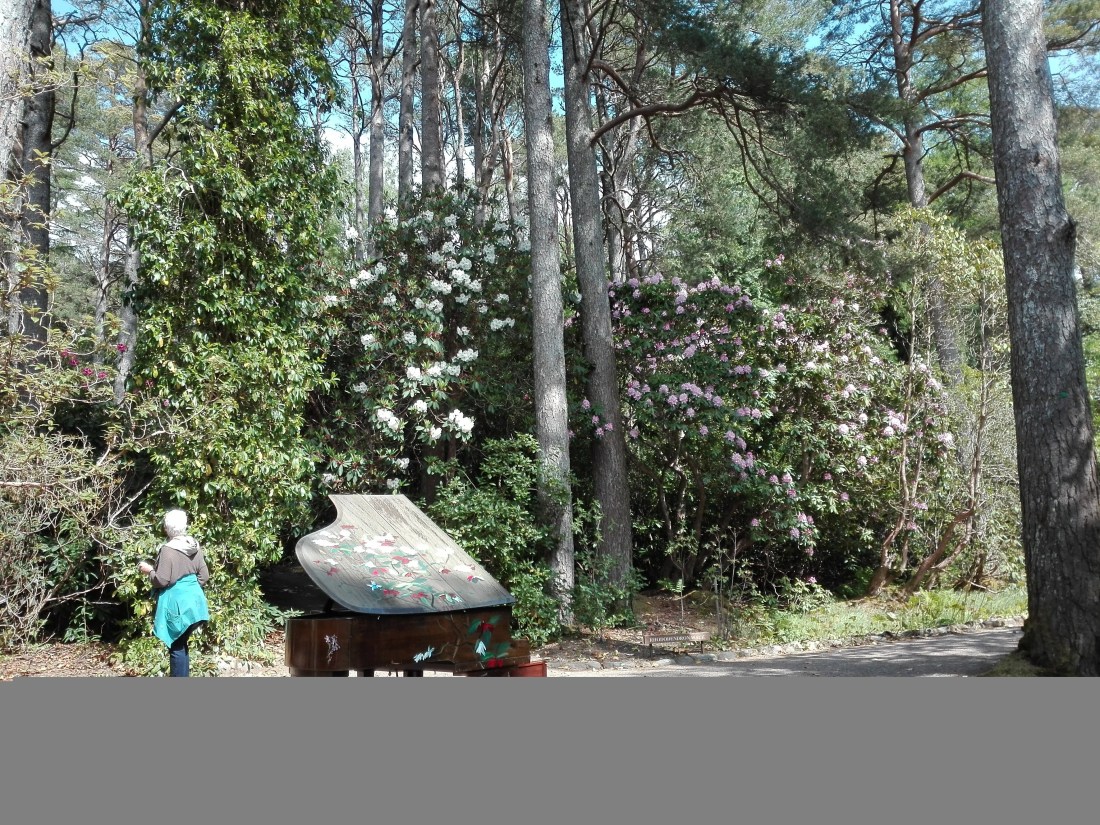
And look what we found in the middle of the gardens:IMG_20180525_135407Not sure what happened to the bottom of this photo.
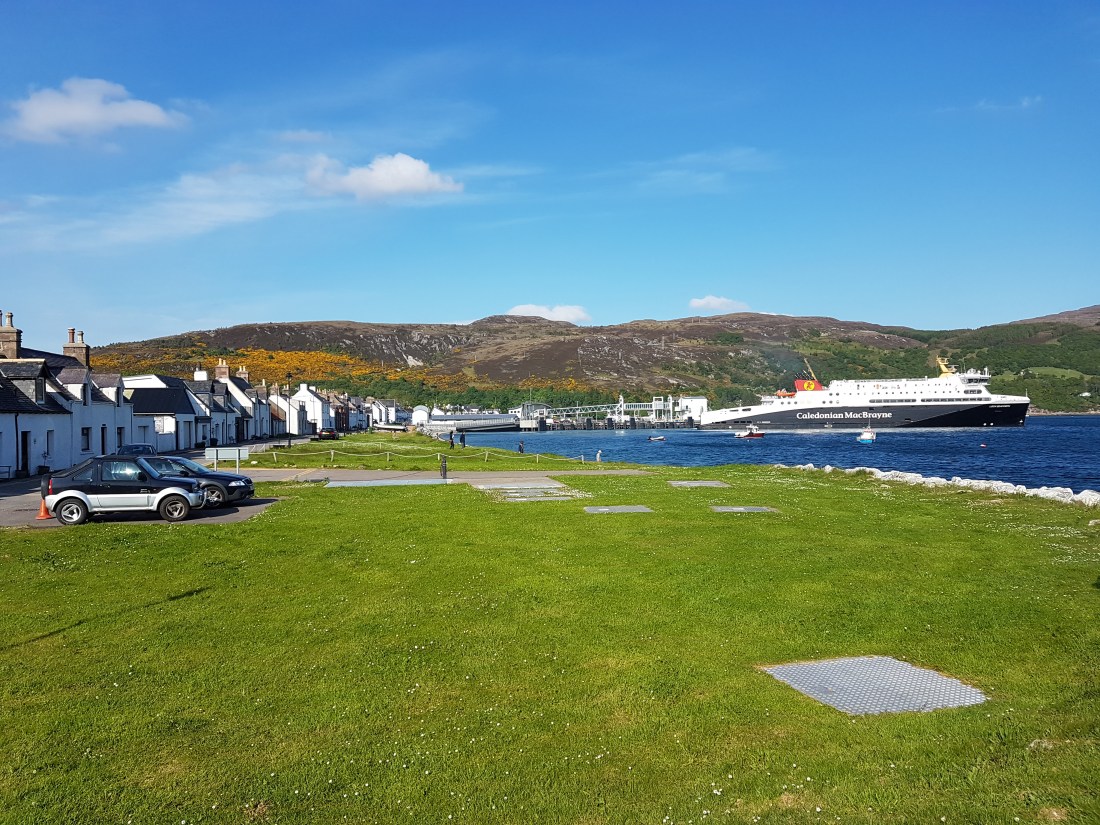
Ulapool is mostly about the ferry, which goes to the northernmost Outer Hebrides islands of Harris and Lewis. Yep, Stornoway. When you see the ferry, it dwarves the town.FERRIESThe ferry seems to be saying come on board, but we can’t, because we couldn’t find any available accommodation. The town is not worth staying in, but we are, for three nights. Saw a great band here last night, The Glasgow Guitar Colloquium, so all OK really, even though we’re staying in a hostel. S’fine.

Ullapool 2

More Inverness

A delightful walk along both banks of the River Ness was interrupted by Indoors rushing into the city’s botanic garden and the adjacent swimming pool complex. Both were impressive, apparently.

A great dinner in a converted church saw out the day. The next day featured the new Solo – A Star Wars Story. 11am showing in a brand new Venue cinema multi-screen. We were two of the 19 in the audience. It was the film’s UK release day. Seemed to be a solid part of the Star Wars stock.

Off then to Culloden Moor, Bonnie Prince Charlie’s last stand before escaping to Skye – remember, we covered this in an earlier blog – just shows we must be travelling in some order. After turning round in the attraction’s car park, rammed with cars and coaches, we set off for The Black Isle, just to the north of Inverness.

On the point near Rosemarkie, opposite the still army-used Fort George, we found a large group of people waiting.PORPOISES

This is one of the best UK locations for seeing porpoises and seals. We left them to it, but when we turned round, having started to walk back along the glorious curving beach, they had all gathered by the water’s edge. Looked like they were going to join the whatever they could see in the water.

On the road back to Inverness, we came across the Cromarty Firth oil rig burial place. Well, rigs are gathered there today to say goodbye, to be repaired or towed off to some other part of the world. Eerie, there were five rigs and more bits of rigs, just standing in the water. OIL RIGS

Ullapool

Inverness

From the ferry destination, Kilchoan, on the UK’s most western piece of land, West Ardmanurchan, we drove, slowly, along the most beautiful, mostly single carriageway road. It is interesting how most drivers understand the process, you stop at passing places for people to pass, both from in front and from behind. Yet there are some who just do not get it. We followed one of the latter for 20 minutes this morning.

The run in to Inverness, which is where we are AirB&B’d for three days, runs along Loch Ness and therefore passes the Loch Ness Museum. Winner of a previous Scottish Tourism National Award for Attractions, this is a friendly, ‘tongue in cheek’ series of videos exploring the myths of the monster. We were both impressed and intrigued that the jury is, as yet, indeterminate. We thought about a photo for this blog but decided you wouldn’t believe it.

Inverness is a city that feels like a small town. A bit like Swansea, perhaps, but tighter and in better nick. And it has some cracking pubs serving local beers. To be researched ….

More Inverness

Mulled Over

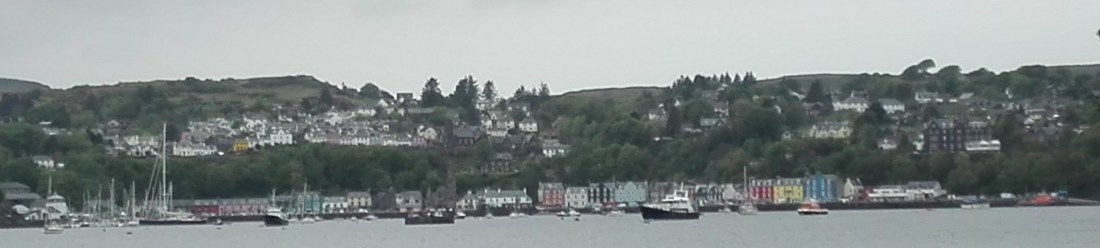
On Sunday, in light showers, we took the coastal walk to Aros Park, passing waterfalls, yachts, mosses, more cuckoos, a woodpecker and quite a few tourists. Tranquil. Looking back, this was the view of the town, the place where we’ve been staying the little red building almost at the right hand end of the photo. It is also right next to the port from which we take the ferry to Kilchoan on Tuesday.TOBERMORYIndoor’s knee was playing up so we limped home.
On Monday we took the opposite coastal walk to the Rubha nan Gall lighthouse, built by Thomas Stevenson, grandfather of Robert Louis. Saw another eagle hovering over the cliffs. The knee played up again.

The population of the island amounts to just under 3,000, Tobermory about 900. In the winter, it sounds like it’s a quiet and lonely place, that is according to Graham, our Tobermory Distillery guide. He used to be a policeman in The Met. The tour was fun, as was the compulsory tasting of both whiskies produced here: Tobermory and Ladaig (pronouced laycheck and using peated barley). It transpires that all bar one distilleries, Glenfarclas, are owned by multinational companies. Tobermory is owned by a South African conglomerate. I blame them for my heartburn.

Inverness

Isle of Mull

On Thursday we left Skye, taking the last (in the world, no less) operating turntable ferry at Glen Elg to the mainland. The ferry has space for six cars, its platform being turned by the crew pushing it round. Very sweet. The ride lasts 10 minutes.

TURNTABLE FERRY QASHQAI

Further on the way to Oban, where we stayed the night, we stopped off at the Nevis range, taking a gondola chair lift up Aonach More. We had lunch at 2,175ft, three mountains along from Ben Nevis. The macaroni cheese was awful, the Orkney Brewery beer great.

In Oban, “seafood capital of Western Scotland”, we had a fab dinner, seafood, of course. To gain an appetite / undertake our strict daily McCAIG'S TOWERexercise regime, we walked to the top of the town to experience McCaig’s tower, a huge ring of stonework with arches, built between1895 and 1900 by said army man, but with no purpose in mind. So this conspicuous edifice has a lawned garden inside; however, the balcony at the front has stunning views over the town, the lochs and the mountains stretching away to the Outer Hebrides. Oban is a serious fishing and ferry town.
On Friday, we took one of the ferries to the Isle of Mull, a 50 minute journey, and are here, in Tobermory, for four nights. Our AirBnB is a bedroom, bathroom and kitchen in a four apartment complex. The other apartments are only bedrooms. Rip Off I hear you clamour. I cannot disagree. But the building is at the northern end of the iconic frontage for which Tobermory is world renowned. Yep, more than Tenby. And it is a beautiful run of brightly coloured, mostly Victorian buildings overlooking the harbour. This place is also overrun by visitors from all over the world, Americans most obviously, as they do.

And for our contribution to the royal wedding, we were looking around the Abbey on the island of Iona, a 10 minute ferry ride from the south western tip of Mull. Famous for being the base of St Columba, who delivered Christianity throughout Scotland and Ireland in the 6th century, the abbey is impressive, its museum, featuring carved stonework, inspiring. Then we had a walk over a white sanded beach, again to do the right thing.

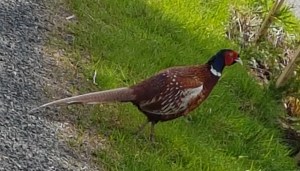
On the trip back, a mostly single track road over the centre of Mull going up and along its highest mountain Ben More, we saw a pair of eagles. Then we saw thisPHEASANT

Mulled Over

Skye 2

Yesterday we visited the Flora MacDonald memorial at the north end of the island. You might remember her as the one who sang about a boat over the sea to Skye as she helped Bonnie Prince Charlie escape from the English after losing the battle of Culloden Moor. Transpired she married well, twice, lived part of her life in the States and died, back on Skye, aged 72. Lady done well.

The island is almost overrun by tourists, coming from all over the world, and it’s not even main season here. Most conspicuous are the German motorcyclists, here in myriads (appropriate collective?) and, of course, all in their fifties or older. The b&b we’re staying in had some English in two nights ago and Swiss last night.

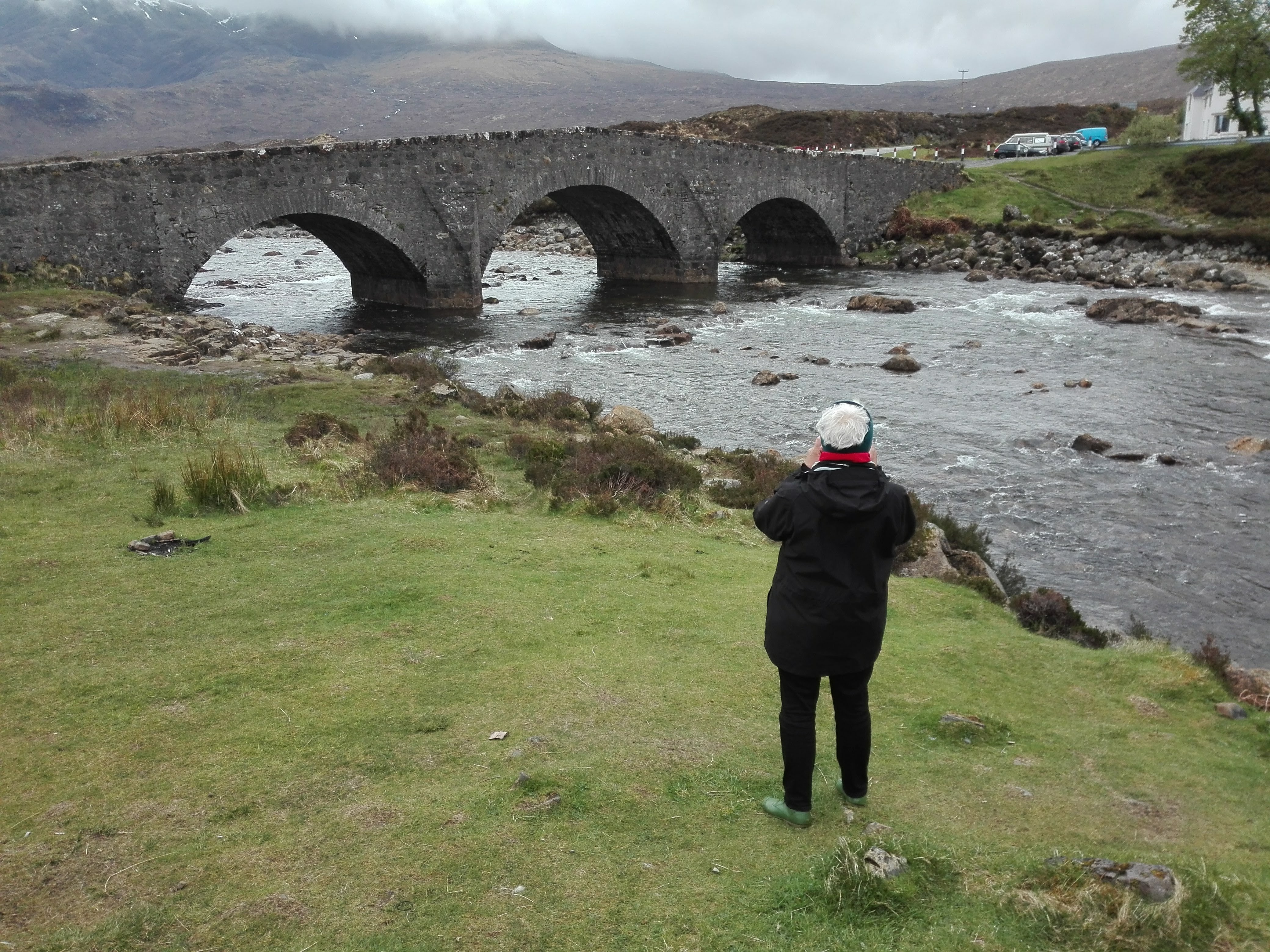
Stopped at this bridge, at Sligachan, photo below.

IMG_20180515_153853

Just happened to be next to the island’s other craft brewery, called The Cuillin Brewery after the adjacent Red and Black Cuillin mountains.

Many of the roads on the island are single lane, with many passing places; instructions suggest you let pass oncoming as well as following traffic. Seems to work well. Up to a point, anyway, as we were held up in a 40 minutes traffic jam this morning after climbing, well walking, up in the Quiraing mountains. This seems due to the 60 or so cars parked by fellow mountain walkers and, especially, the idiots who parked in the passing places. Indoors wrote a stern note and left it under one of the culpret cars. That’ll teach ’em.

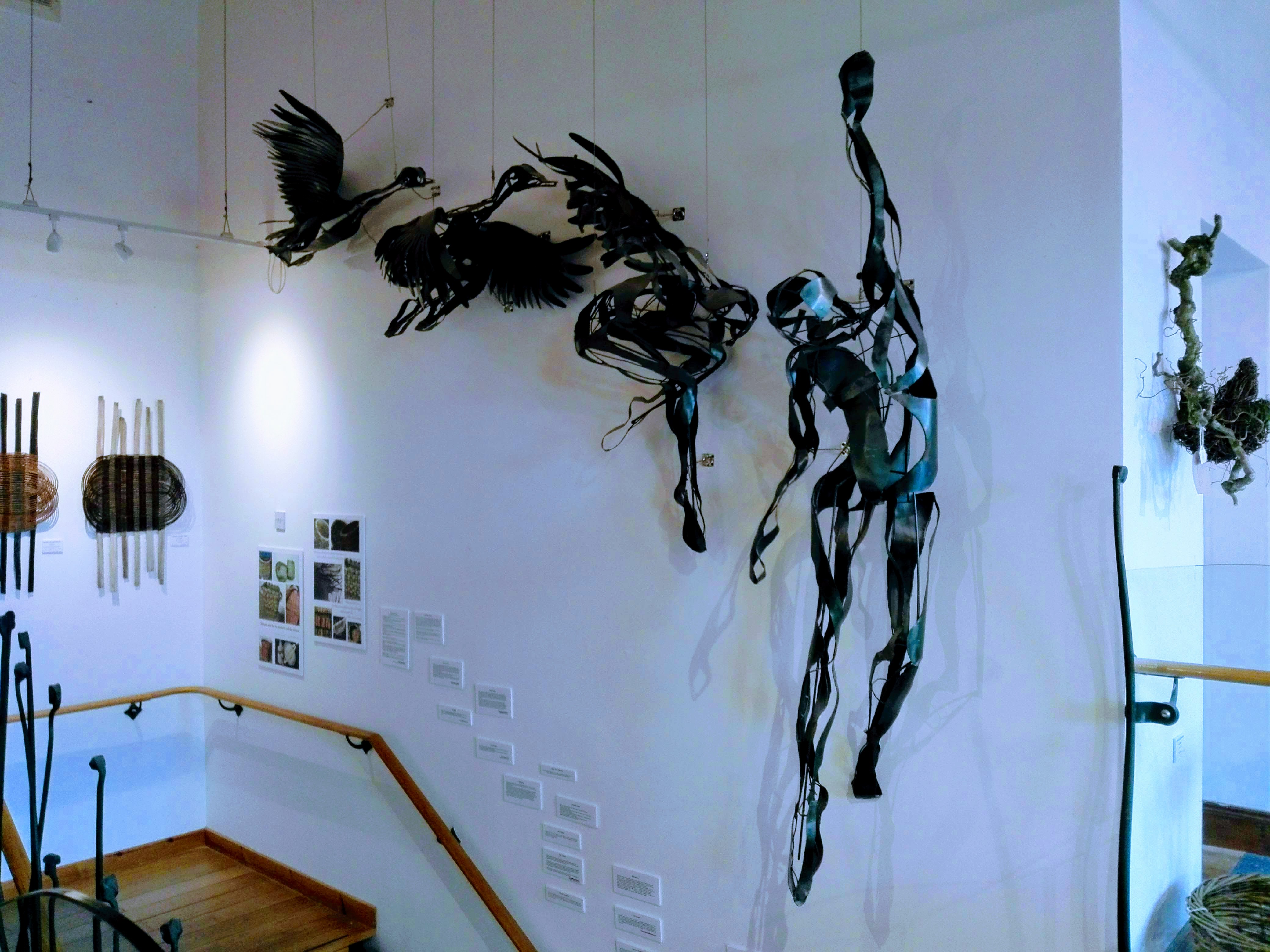
Went to a naff cultural centre in the main town, Portree, but the visit was saved by this fantastic metal sculpture, apparently based upon a local myth involving a swan turning into a man.

IMG_20180516_133115-EFFECTS


Isle of Mull